Cyprus is undergoing a decisive economic transformation. Once defined by services, the island is rapidly emerging as a regional technology hub, driven by foreign headquarters, scale-ups, strategic policy reforms and a maturing innovation ecosystem that is reshaping its role within the EU and beyond.
Insights

Georg Bühler
Managing Director, Mount Pelion Capital
Digital assets are no longer a niche, but a part of modern finance attracting a growing number of investors – and there is immense potenti ...
Read More
Marios Tannousis
CEO, Invest Cyprus
Cyprus is shaping its identity as a regional technology hub. Its National AI Strategy drives the adoption of artificial intelligence across key se ...
Read More
Valentinos Polykarpou
Chairperson, TechIsland
TechIsland Chairperson Valentinos Polykarpou, explores the island’s pivotal moment of transformation as its fast-expanding tech and innova ...
Read More
Cyprus’ technology and innovation ecosystem has entered a decisive growth phase. What began as a services-led international business centre is rapidly evolving into a recognised regional technology hub, driven by foreign direct investment, scale-ups establishing headquarters (HQs), and sustained public-private commitment to innovation. The influx of global companies setting up operations on the island has significantly deepened the local industry cluster, strengthening Cyprus’ reputation as an emerging tech jurisdiction within the EU.
Cyprus has articulated clear ambitions to position itself as a regional base for science, technology, and innovation-driven businesses. Government policy now explicitly frames Information and Communications Technology (ICT) as a catalyst for productivity, competitiveness and long-term economic resilience. This strategic focus has translated into concrete reforms, targeted incentives, and rising international visibility for the country’s tech ecosystem.
Measurable Economic Impact
The scale of transformation in the Cyprus tech sector is increasingly visible in economic data. The information and communications sector has now become the largest sector in Cyprus, having risen on average by an astonishing 17.7% per year in 2015-24, with big US companies including multinationals based in Ireland being the key markets. International tech firms continue to expand operations on the island – spanning AI, SaaS, cybersecurity, fintech and digital transformation – and contribute to job creation, expertise inflows, and ecosystem maturity.
According to a 2025 KPMG Cyprus study, the broader tech and innovation sector now contributes approximately 16% of national Gross Value Added (GVA), equivalent to nearly €8 billion, placing Cyprus among the leading EU countries for ICT contribution to GVA.
Over the past decade, ICT GVA has grown by 347%, while employment in the sector has more than tripled to over 26,000 professionals. These figures point to a structural shift, signalling that technology has become a core pillar of the Cypriot economy rather than a peripheral sector.
HQs, Scale-Ups, and Acquisitions
Cyprus has long served as a regional headquarters base for international ICT firms operating across Europe, the Middle East and Africa. Companies utilise the island for software development, systems integration, testing, R&D, project management, marketing and sales, as well as shared services. International heavyweights such as Microsoft, SAP, Oracle and IBM have been present in Cyprus for many years, and the island has long been a prime location for the fintech industry as it is home to hundreds of the world’s biggest forex brokers and online-trading platforms.
Established players include NCR and Amdocs, while Cyprus also hosts global headquarters such as Wargaming, 3CX, and Viber. Viber remains a defining success story: founded by foreign entrepreneurs seeking an EU base, it headquartered in Limassol before being acquired by Japan’s Rakuten for $900 million, demonstrating the island’s ability to support global-scale outcomes.
Recent years have brought a new wave of high-profile technology investments. Revolut established a Cyprus-based crypto-asset hub following regulatory approval by CySEC, joining firms such as Crypto.com, eToro, and BitPanda. US consumer software provider TangoMe, capital markets technology leader Murex, and global fintech group Capital.com have also expanded their Cyprus operations.
A milestone for the ecosystem came in 2025 with Adobe’s $1.9 billion acquisition of Semrush’s marketing intelligence platform. Semrush, which has been headquartered in Cyprus for over a decade and serves global clients such as Amazon and TikTok, has consistently cited the island’s operating environment, incentives and talent access as key growth enablers. The country’s investment promotion agency Invest Cyprus has described the transaction as evidence that Cyprus is now hosting companies that mature into acquisition targets for global tech majors.
Other prominent players that have chosen Cyprus are TheSoul Publishing, one of the largest online publishers in the world with over 1.5 billion followers. The company develops videos across 100 channel brands in 19 different languages, including some of the most-subscribed YouTube channels such as 5-Minute Crafts, Slick Slime Sam and Bright Side. In addition, Medicover, a multinational specialised diagnostic and healthcare services provider has invested in Cypriot innovative biotech, while US business process outsourcing provider SYKES – now part of Sitel Group – has been expanding its operations in Cyprus over the last five years.
Fostering a Strong Cluster
Public policy has played a decisive role in the sector’s expansion. The establishment of the Deputy Ministry of Research, Innovation and Digital Policy provided institutional leadership for Cyprus’ digital transformation and innovation agenda. Funding programmes, regulatory reforms, and business facilitation measures have reduced friction for both start-ups and multinational firms.
The digital transformation of Cyprus and its efforts to take bold steps to be a part of the ongoing Fourth Industrial Revolution (4IR) – which is accelerating the utilisation of new technologies such as artificial intelligence, cloud computing, robotics, the Internet of Things, and advanced wireless technologies – is ushering in a new era of economic disruption that Cyprus is fully embracing.
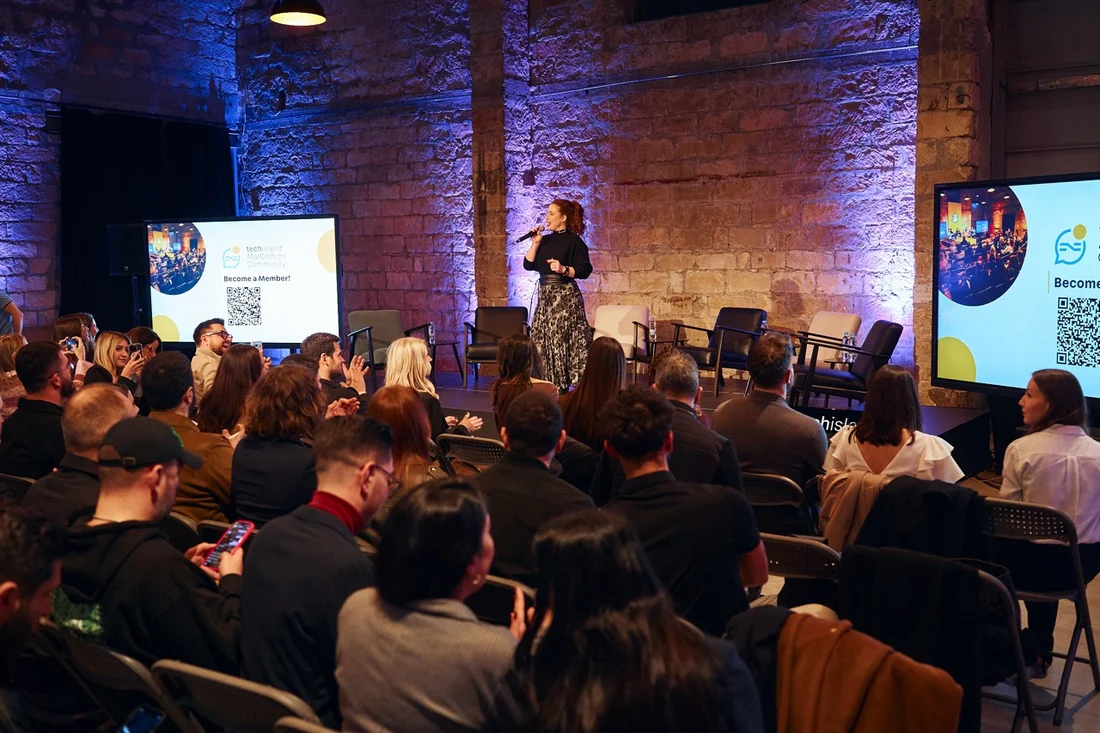
The ecosystem is strongly supported by TechIsland, now Cyprus’ largest tech association with more than 350 member organisations across software, fintech, gaming, AI, healthtech, blockchain and cybersecurity. Founded in 2021, TechIsland has become a central platform for ecosystem advocacy, skills development, and international promotion.
Cyprus’ improving global profile is also reflected in the StartupBlink ecosystem rankings, where the country recorded one of the fastest growth rates worldwide, driven by rising startup density, investor engagement, and international visibility.
The growing presence of global technology companies in Cyprus has further boosted its reputation as a preferred jurisdiction to set up operations. In turn, this surge of international investment has also brought in fresh financial resources and enhanced the level of global expertise and networks on the island.
AI, Research, and Advanced Tech
Artificial Intelligence (AI) and advanced computing are now central to Cyprus’ innovation strategy. The government has adopted a National AI Strategy aligned with EU frameworks, focusing on ethical deployment, skills development, and public-private collaboration.
The Research and Innovation Foundation (RIF) has expanded funding programmes for AI, deep tech and applied research, while also strengthening international partnerships. A notable development in 2025, was RIF’s strategic MoU with Tenstorrent, a global leader in AI hardware and RISC-V computing, positioning Cyprus within emerging high-performance computing value chains.
Cyprus is also home to seven of the EU’s 38 evolving Centres of Excellence, while Digital Innovation Hubs continue to support technology adoption across agriculture, health, construction, transport, manufacturing and energy, enabling applied innovation in AI, big data, cloud computing and cybersecurity.
The sector has become fiercely competitive, with a number of players deploying cutting edge solutions to both increase their local market share and generate growth through the launch of new technology and products. 5G was rolled out in 2021, making Cyprus the first EU state to achieve 100% 5G coverage, and in 2024, Cyprus became the first EU member state to join the global Digital Cooperation Organization (DCO). Space and defence are set to be the next sectors of growth as Cyprus became an associate member of the European Space Agency (ESA) in October 2025 and is building close defence ties with the US and EU, which will also generate hi-tech demand.
Growing Start-Up Ecosystem
The annual StartupBlink Global Startup Ecosystem Index named Cyprus as the fastest-growing startup system in the EU in 2025, with a 71% annual increase in start-ups to 305. Cyprus was also the only country with a population below two million to have four cities included in the global startup index – with each city also recording an improved position compared to the previous year. The Index ranked Cyprus second globally in the gaming sector, third in fintech across Southern Europe, and ninth in the European Union in blockchain technology.
These developments have also been supported by incentives such as the Start-Up Visa, Digital Nomad Visa, and streamlined pathways for employing highly skilled third-country nationals. The government-backed Cyprus Equity Fund, implemented with the European Investment Fund, has strengthened access to venture capital, while accelerators and angel networks continue to improve early-stage funding and mentorship.
Start-up accelerators like the Cyprus Business Angels Network (CYBAN), Cypriot Enterprise Link, Chrysalis Leap and Repower Cyprus have all boosted the environment, along with events such as Hack Cyprus Hackathons, the Clean Launchpad Competition, as well as Startup Weekend and Startup Live. As part of the National AI Strategy, a vibrant start-up ecosystem is being fostered through the development of an accelerator programme to support the successful launch and survival of new AI business ventures. This will provide expertise in developing AI solutions and help firms access expert communities. Apart from creating opportunities to team up with other firms and research institutions and facilitating the access to flexible and effective financial funding, this programme provides dedicated support to testing and open data environments – including regulatory sandboxes.
In addition, a key attraction for both start-ups and high-tech companies is the Cyprus Intellectual IP Box Regime, which provides a competitive maximum tax rate of 2.5% on income earned from IP assets. Cyprus’ regime also applies to a wider range of income compared to other European schemes, most of which restrict benefits to income from patents and supplementary patent certificates.
Attracting Talent
Cyprus already has an extensive and internationally recognised pool of skilled professionals in financial and business services, but where this pool still remains relatively shallow is in the tech sector – a gap the country urgently needs to bridge if it wants to further develop its tech landscape. Being a relatively new sector, Cyprus has not yet had sufficient time to cultivate adequate numbers of local talent. Additionally, the country’s small size naturally limits the availability of homegrown tech experts.
Cyprus continues to report one of the EU’s lowest proportions of STEM graduates, reinforcing the importance of education reform, reskilling initiatives and international talent attraction. Industry leaders note that Cyprus should ensure its education sector adopts a strong focus on STEM fields and entrepreneurship, and strengthen collaboration between industry, academia and government. Attracting more tech talent to Cyprus will ultimately lead to cross-fertilisation among professionals and an increase in local start-ups, while immigration-friendly policies and targeted skills development programmes would further boost both local and international talent flows.
To address these needs Cyprus launched a set of incentives geared to ramp up interest for companies to set up headquarters in the country. The plan has considered the best practices from other European countries, with emphasis on domains related to technology, shipping, innovation, research and development, biogenetics and biotechnology, without excluding any other companies that choose Cyprus as their place of business. However, tech executives say a comprehensive strategy is needed to attract and more importantly retain talent from abroad, while simultaneously upskilling and reskilling the local workforce.
Education Reform
The education sector has been adapting to the reality of tech talent shortages introducing curricula to supply more skilled graduates to the labour market. The local universities now provide excellent bachelor and masters programmes in computer sciences and technology, consistently producing tech-savvy candidates to join the ranks of some of the world’s leading ICT companies. For example, the University of Nicosia (UNIC) broke new ground in university adoption of blockchain technology and offers the first certified online blockchain course (MOOC) and the world’s first master’s degree for digital currencies. More than 25,000 students have taken the MOOC and over 500 students have enrolled in the MSc in digital currencies.
Cyprus has also established several Digital Innovation Hubs (DIHs) such as the CYRIC Digital Innovation Hub, the KIOS Innovation Hub, the Robotics Control and Decision Systems (RCDS) Lab at the Cyprus University of Technology, and the Entrepreneurship Centre at the University of Cyprus. These DIHs are active in various market segments, such as agriculture, health, construction, transport, manufacturing and energy, and in a wide range of technological areas, including AI, Big Data, cloud computing, and cybersecurity. The AI Expert Group considers the creation of a (virtual) AI DIH with dedicated AI research programmes that could serve as a platform where the scientific and business community could access and share knowledge.
Long-Term Sustainability
Cyprus is determined to diversify and harness growth with a technology-driven economy. The biggest spender by far on IT in Cyprus is the financial sector, followed by the telecoms providers and the public service. Support and training services form the largest primary market in Cyprus, followed by project and outsourcing services. There is currently big demand for support services and skills training in ICT, especially as communications are increasingly moving to 3rd Platform technologies, such as mobile, cloud, and big data systems. Services and software are expected to be the top-performing segments of the Cypriot IT market in the coming years, due to continuing demand for quality end-to-end solutions that focus on enhanced user experience. Innovation and specialisation will be key elements to succeed in the Cypriot market.
For Cyprus to remain competitive largely depends on how it adapts to new realities like virtual banking, e-governance, agritech, new and renewable energies, as well as smart cities. Business success will depend on how new technological capabilities will be utilised and that digital infrastructure such as high-speed networks that are fundamental to the operations of tech companies are consistently upgraded.
Scaling Up the Future
Cyprus’ technology and innovation sector has reached a level of maturity where scale-ups, exits and sustained foreign investment are becoming recurring features of the ecosystem. The combination of EU market access, competitive operating costs, a robust IP regime, targeted incentives and a growing international talent base continues to differentiate Cyprus within the European tech landscape.
The investment landscape for technology and innovation in Cyprus is both promising and dynamic, according to industry experts. The island is an ideal location for a various types of tech companies, but the market size and characteristics make it an attractive testing ground for pioneering technologies and business models – in particular for segments such as fintech, healthtech, proptech and cybersecurity where innovative approaches can be tested and refined.
With increasing numbers of tech companies moving to the island and with the country’s top-tier universities and research institutes providing increasing numbers of highly qualified staff and carrying out ground-breaking and technologically innovative projects, Cyprus’ tech landscape is sure to see substantial growth in the coming years.
With further momentum across fintech, SaaS, gaming, AI, healthtech and cybersecurity, and with increasing integration into global innovation networks, Cyprus is no longer simply aspiring to become a tech hub – it is actively shaping one.
For more information, contact Cyprus' investment promotion agency, Invest Cyprus.
All rights reserved. The material on this site may not be reproduced, distributed, transmitted, cached, or otherwise used, except with the prior written permission of The Profiler Group.
December 2025